



👨👧 First Daughters Tend to Resemble Their Fathers — Coincidence, Science, or Something Deeper?
Posted on [Insert Date] | by [Your Name]
Category: Family | Parenting | Genetics
👀 Ever heard someone say, “She’s the spitting image of her dad”?
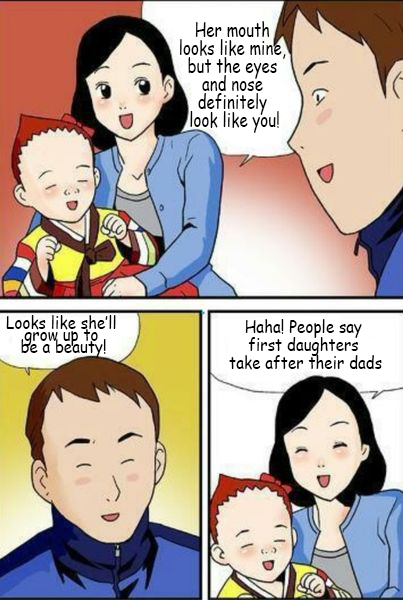
When a baby girl is born — especially the first daughter in the family — people often point out how much she looks like her father. From the shape of the nose to the curve of the smile, the resemblance can be uncanny.
But is this just a common coincidence fueled by family bias, or is there actually a scientific reason for it?
The answer might surprise you.
🧬 What Science Tells Us: Genetics and Resemblance
✅ 50/50 — But Not So Simple
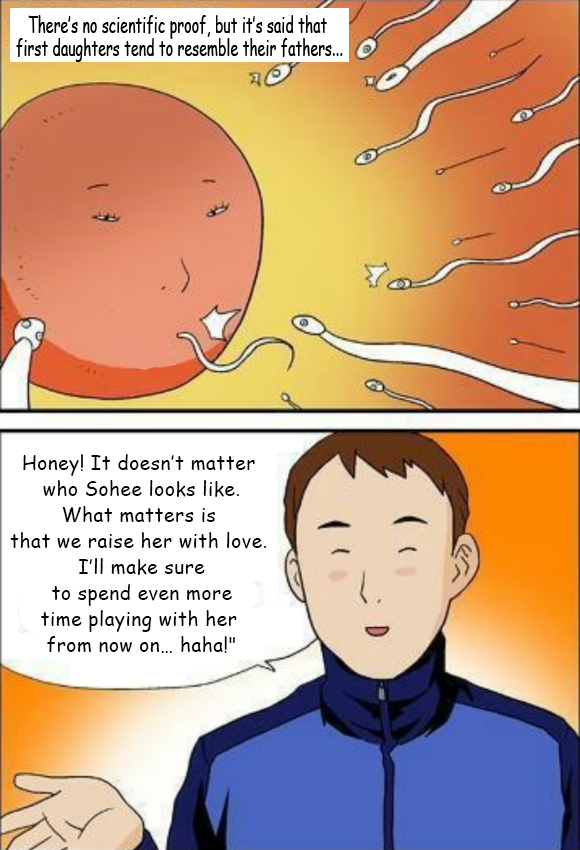
Every child gets 50% of their DNA from each parent, but how that DNA is expressed isn’t an even split. Certain traits can be dominant or recessive, and paternal genes may be more visually dominant in certain combinations — especially in firstborns.
A 2017 study published in Evolution and Human Behavior found that fathers were more likely to recognize babies who resembled them, and that resemblance may even affect how much time and care a father is willing to give.
💡 Evolution might have favored babies who look like Dad — especially in societies where paternity wasn’t guaranteed — as a subconscious signal of connection.
📚 Evolutionary Psychology: Resemblance for Survival?
In ancient times, men were more likely to invest resources in children they believed were biologically theirs. A child who resembled the father may have received more protection, food, and nurturing.
This “resemblance bias” might have developed as an evolutionary advantage — one that still echoes today.
Of course, we’re far from cavemen, but our biology doesn’t evolve as quickly as our culture. And these ancient instincts may still influence modern parenting behaviors, often in ways we don’t consciously notice.
👩👧 Real-Life Examples: Fathers and First Daughters Who Look Alike
- Reese Witherspoon and Ava Phillippe — Their twin-like resemblance has gone viral many times.
- Barack Obama and Malia Obama — Many say Malia carries her father’s expressions and elegance.
- Tom Hanks and Elizabeth Hanks — Same eyes. Same smile. Same calm energy.
In everyday life, it’s common to hear people say, “She’s got her dad’s eyes,” or “That’s her father’s grin.” These aren’t just compliments — they’re often true at a genetic level.
💞 The Emotional Bond That Follows
The connection between a father and his first daughter often runs deep — and it’s not just about looks.
Why the Father-First Daughter Bond Is So Special:
- New Dad, New Love
The first daughter is often a dad’s introduction to parenting. Everything is new — and emotions run high. That first cry, that first diaper, that first step. Dads often become deeply attached. - The Protector Role
Fathers naturally feel protective of daughters, especially their first. That instinct can create a strong emotional foundation early on. - Confidence Building
Studies have shown that daughters with involved fathers are more likely to:- Develop high self-esteem
- Perform better in school
- Feel confident in relationships
- Become strong leaders
- Modeling Future Relationships
A father often sets the blueprint for how his daughter will expect to be treated by others. Respect, kindness, and emotional availability matter more than most realize.
🧠 Nature vs. Nurture: It’s Not All DNA
Yes, genetics play a big part — but nurture amplifies what nature starts.
Spending time together leads to shared habits, facial expressions, and mannerisms. Over time, a daughter may start to laugh like her dad, gesture like him, or even adopt his posture — further deepening the resemblance.
Sometimes, it’s less about the shape of the face and more about the energy, aura, or attitude that gets passed down.
🎯 Final Thoughts
Whether you’re a parent marveling at your daughter’s familiar face, a daughter hearing for the hundredth time, “You look just like your dad,” or simply someone curious about how family traits pass down — this theory is more than just fun family talk.
It’s a glimpse into how biology, love, and legacy all come together.
Because sometimes, the face you see in the mirror is more than yours alone — it’s a piece of your family’s story, passed on with pride.